
Demystifying aI at work and in organizations.
Demystifying AI at work and in organizations. Myths travel faster than evidence, so my research looks closely at how people actually use AI in their jobs, giving workers, managers, and policymakers a grounded picture of how work and organizations are really changing.
Have a look around.
Below the publications and studies in progress are showcased.
Feel free to reach out for a coffee if you have any thoughts, questions, ideas for collaboration, or just want to chat.

Publications

Qualitative research on creative workers using generative AI
Generative AI is changing how creativity happens. Our research shows how AI compresses the creative process while introducing a new risk: ideas can look finished before they are fully developed. Steps that used to be spread across colleagues and handovers collapse into one sustained interaction with the tool — what we call process collapse.
Article title: Harnessing a 'Spirited Technology': How Working with Generative AI Collapses the Creative Process
Ethnographic study at media company RTL Nederland (February 2024 – March 2025): 43 hours of observation, 24 formal and 7 informal interviews, and visual diaries in which creatives documented their projects
Sample consisted of senior creatives, graphic designers, video editors and directors, covering 24 advertising projects


Practitioner article on Managing process collapse and ‘AI lock-in’
Have you used generative AI to work out an idea, like generating an image or building a quick prototype with Lovable or Claude Design? Because AI outputs look finished, they're much easier to sell to stakeholders than a rough idea. The flip side is AI lock-in: once a polished draft is on the table, stakeholders fixate on its details before anyone has checked whether those details matter.
Article title: Research: Gen AI Is Collapsing Creative Processes (Harvard Business Review, September 2026).
The article offers managers practical advice on how to handle process collapse due to Generative AI.
Qualitative research on employees using ChatGPT at work
The study traces how the employee–ChatGPT relationship develops from private, experimental use into an integral part of knowledge work. Further, it flags three side effects that threaten knowledge ties, the quality of knowledge in organizations, and the social fabric.
Article title: Managing a ChatGPT-empowered workforce: Understanding its affordances and side effects
Spoke with 50 early ChatGPT adopters across 50 organizations about how they experience interacting with the tool in their daily work
studies in progress

Company widE generative AI adoption study
This study draws on over 120 interviews with managers and employees to examine how one company adopted generative AI across the organization. Because generative AI is multi-purpose, constantly updated, and spreads bottom-up rather than through a planned rollout, it unsettles the standard playbook for managing technological change.

Moonshot team and generative ai study
This study follows a team that is transforming the way it works. They set themselves a moonshot goal that seemed unreachable, and have since been using GenAI tools as intensively as possible to find out whether they can get there. In a sense, this team offers a glimpse of the future, with important lessons about what works and what does not. For over a year now, they have been continuously reworking their workflow.

workplace RELATIONSHIPs and emails in times of generative ai
Everyday work communication is where relationships between colleagues are built and maintained. This study examines what happens to that when AI starts writing the messages, and what people do to keep their communication feeling human.

Generative aI and scaling study
Growing a company has always meant hiring more people. This project, with the Erasmus Centre for Entrepreneurship (ECE), asks what happens when AI breaks that link — when firms can grow their revenue without growing their headcount — and what it means for how companies are organised and what work is left for the people who stay.
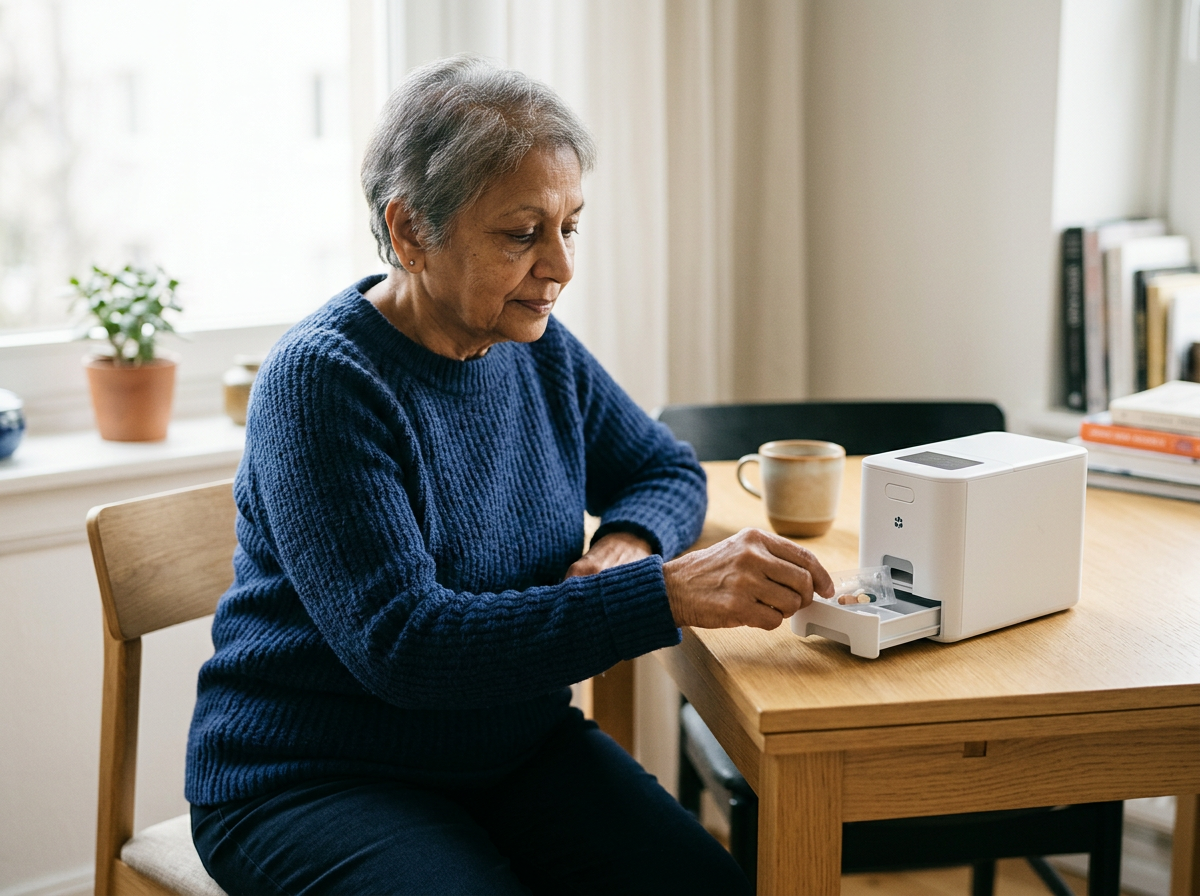
Technology use in Elderly care
Dutch elderly care is turning to technology — medication dispensers, sensors, voice assistants, GPS trackers — to cope with staff shortages and a growing number of clients. Based on interviews and observations at four care organisations, this study shows how these devices shift responsibility away from care workers onto clients, families, and the technology itself, and how some things nobody ends up being responsible for at all. We call this lost responsibilites.
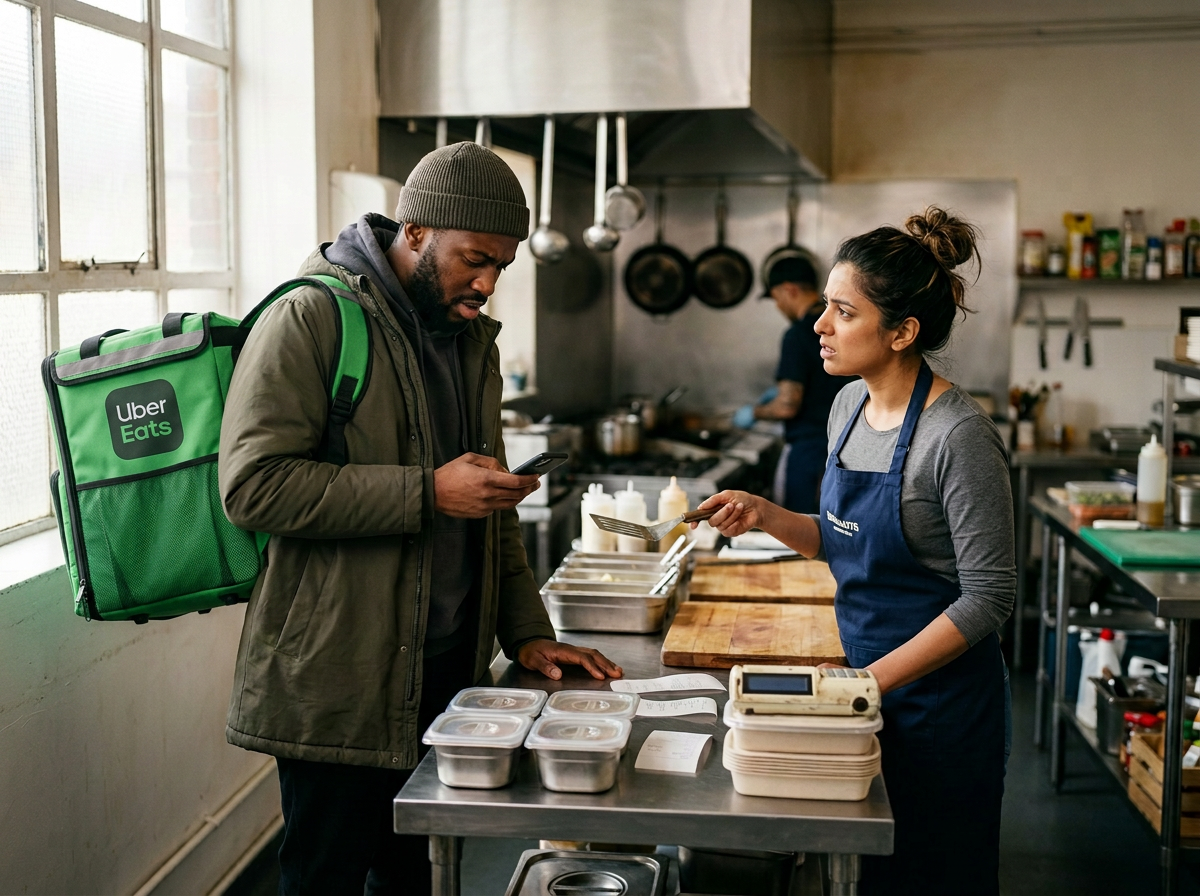
Coordination in the Gig Economy: Working in the Shadow of the Algorithm
"In the gig economy, an algorithm takes the place of a manager: it decides who collects it, and when. This study looks at what happens when those two strangers actually meet — the food isn't ready, the rider is losing money waiting, the kitchen is busy with its own customers. This creates friction between people that the algorithm never 'sees'. Couriers and restaurant staff end up doing the invisible coordination work in the shadow of the algorithm.
Publications
Filters
No results found
No results match your search. Try removing a few filters.